Using data to bring intervention forward

Many patients seek medical advice only after symptoms develop. Others come forward when a relative is diagnosed with a condition, or are invited to attend screening because of their age, family history or other risk factors.

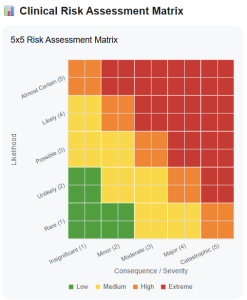
At MEDIdesign, we believe that careful analysis of large datasets can help identify opportunities to act earlier. By modelling the likelihood of a condition developing, we aim to support more targeted prevention, screening and investigation—potentially identifying disease before symptoms become apparent.

Understanding differences between people at lower and higher risk can also reveal patterns that warrant further research into the causes of disease. These insights may help inform treatments, healthcare policy and practical advice for the public.

The value of probability modelling lies in turning data into useful decisions: who might benefit from further assessment, when intervention may be appropriate, and where preventive measures could have the greatest impact. Such models need rigorous validation and should support clinical judgement.

Our ambition is to help healthcare move towards earlier, more informed action—giving patients and clinicians better opportunities to protect health.
Better care with limited resources

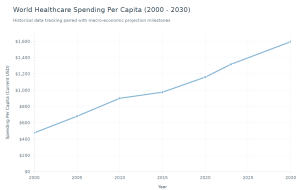
Growth in demand for medical services is relentless. Healthcare providers face the challenge of meeting that demand with increasingly sophisticated technology, while working within tightly constrained budgets and staffing levels. The World Health Organization estimates a global shortage of 11 million health workers by 2030.

Radical solutions are required. At MEDIdesign, our research and development projects focus on finding innovative answers to these resource challenges.

A central theme of our work is enabling appropriate aspects of assessment and treatment to move from hospital settings into primary and community care. Smart technology can help bring care closer to the patient—at a GP surgery or pharmacy—while maintaining specialist oversight.

Our aim is to give hospital specialists visibility of relevant findings, identify cases requiring referral and support further testing locally where appropriate. Alongside this, we seek to empower patients to take an active role in managing their own conditions.

We believe that significant improvements in health outcomes remain possible, even as demand grows and resources come under increasing pressure. Achieving them requires more than new technology: it requires new ways of delivering care.

Sometimes, that calls for revolution as much as evolution.

All together now…

In a good choir, everyone has a part to play. Each singer needs to know their role, listen to others and contribute at the right moment. Singing in tune helps too!

Healthcare also depends on coordination. At MEDIdesign, we aim to develop technology that helps patients and professionals work together, with clear roles, intuitive processes and smooth handovers between stages of care.

Expertise remains essential. Our approach is to make complex activities more manageable by breaking them into clearly defined steps, with built-in checks designed to help identify errors and omissions. The aim is to make each task easier and ensure

Different roles. Shared purpose. Better coordination.

that the next person has the information they need.

The same principle applies to data. Information held across different parts of a patient’s care can become more useful when brought together into a coherent picture. Expert knowledge, structured decision support and carefully governed AI can help interpret that information, with clinical oversight guiding their use.

We see opportunities to uncover new insights, share good practice and help clinicians identify the patients most likely to benefit from particular treatments.

As with a choir, the quality of the result depends on how well the individual contributions come together.